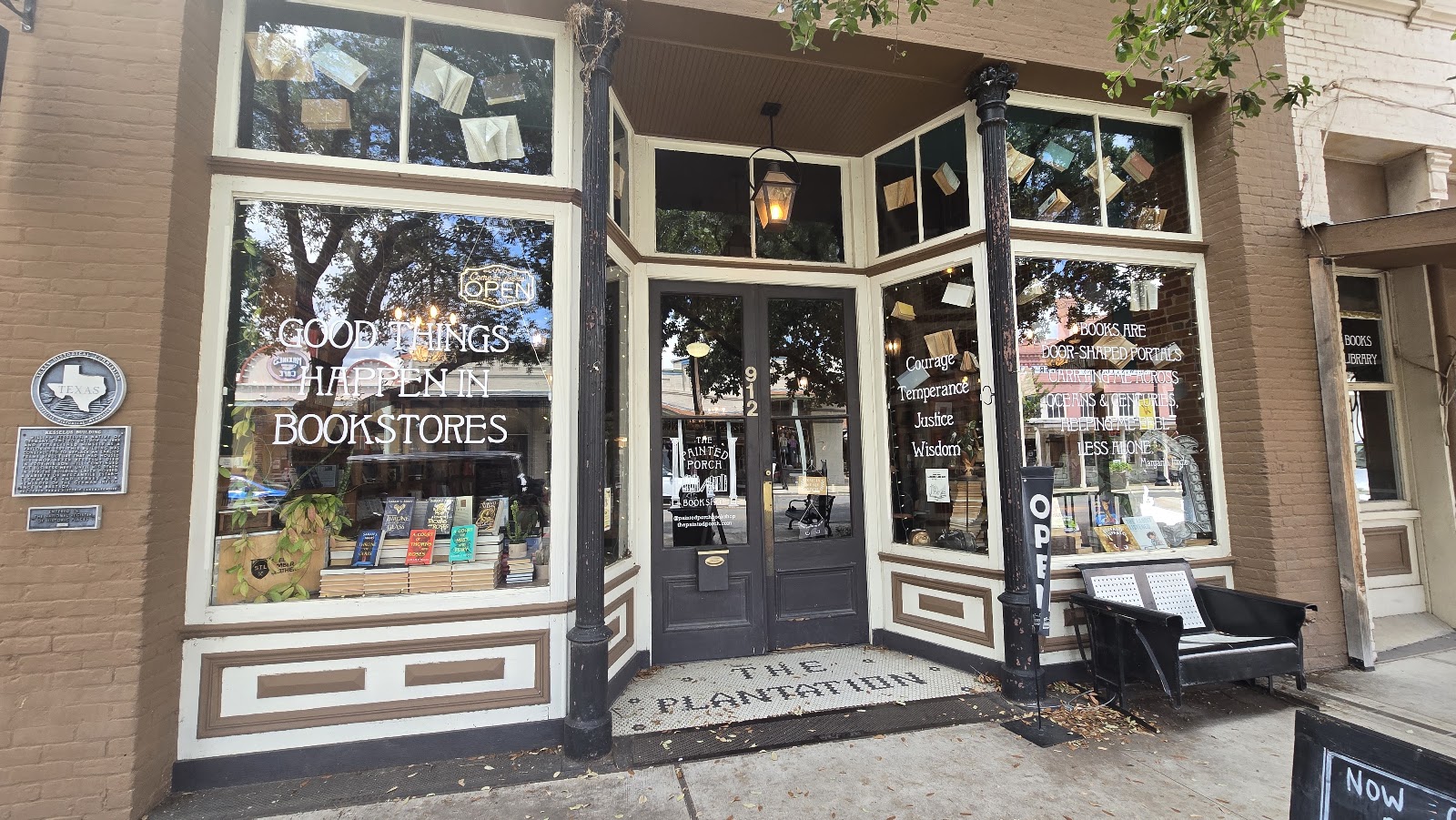
The windows tell you what kind of shop it is before you touch the door. One pane reads Banned Books Lending Library. The other carries Ray Bradbury’s warning: “There is more than one way to burn a book. And the world is full of people running about with lit matches.”
The Stoics would have understood the whole display on sight. They lived under emperors who exiled philosophers and fed scrolls to the fire, and they taught — from hard experience — that a tyrant can seize your library, your freedom, even your life, but never the one thing that finally matters: the judgments of your own mind. “You have power over your mind,” Marcus Aurelius reminded himself, “not outside events.” A banned book, then, is a strange kind of compliment. It means the idea still has teeth.
Inside, a manifesto is carved into the wall above the shelves — and it does not mince words.
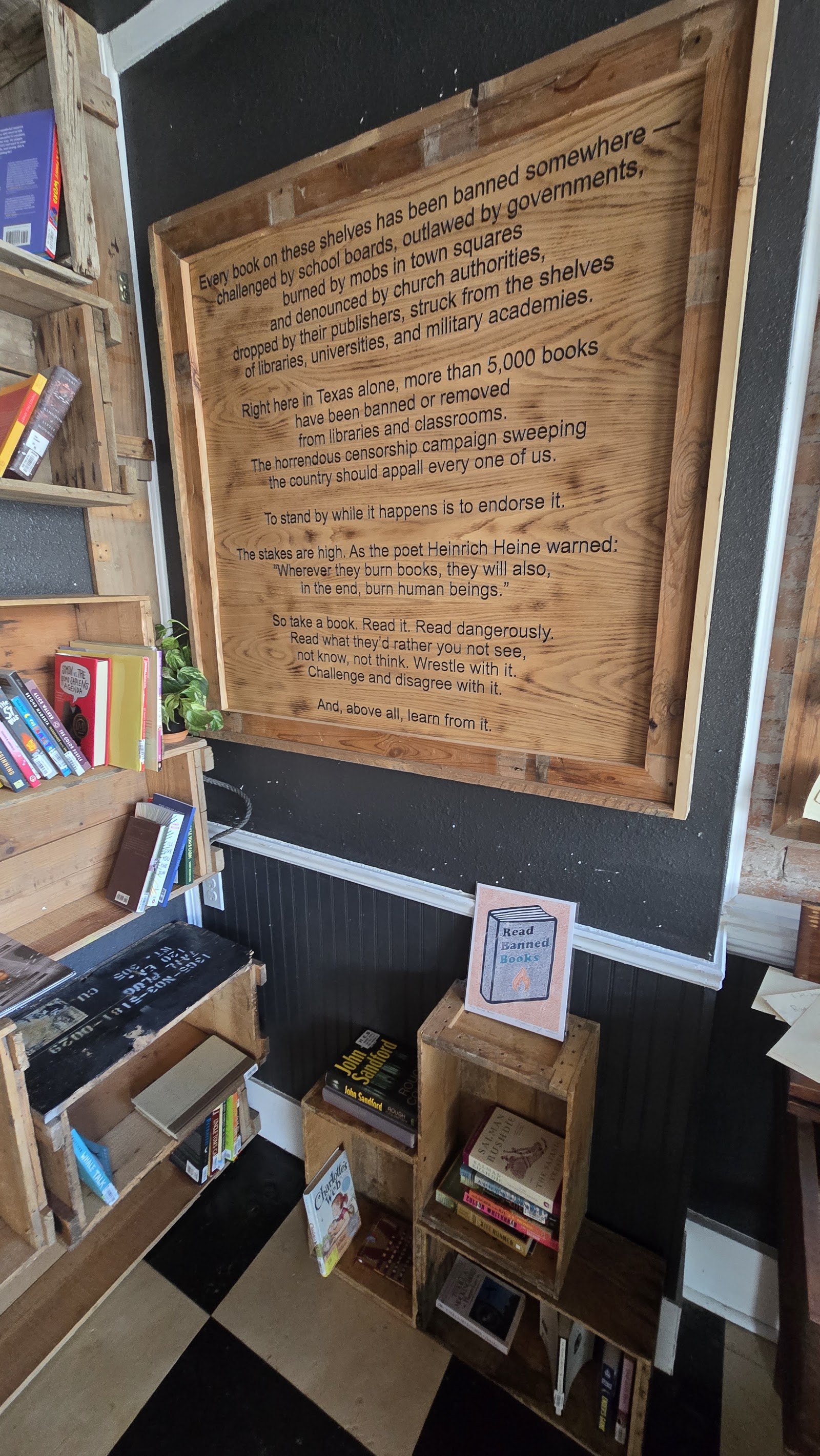
“Every book on these shelves has been banned somewhere,” it begins — “more than 5,000 in Texas alone.” Then the line that could have come straight out of Marcus’s notebook: “To stand by while it happens is to endorse it.” That’s not just anger; it’s the fourth Stoic virtue, justice — the refusal to be a passive spectator to a wrong. And the close is pure Stoic practice: “So take a book. Read it. Read dangerously. Read what they’d rather you not see, not know, not think. Wrestle with it. Challenge and disagree with it. And, above all, learn from it.”
“Wherever they burn books, they will also, in the end, burn human beings.”— Heinrich Heine, quoted on the wall
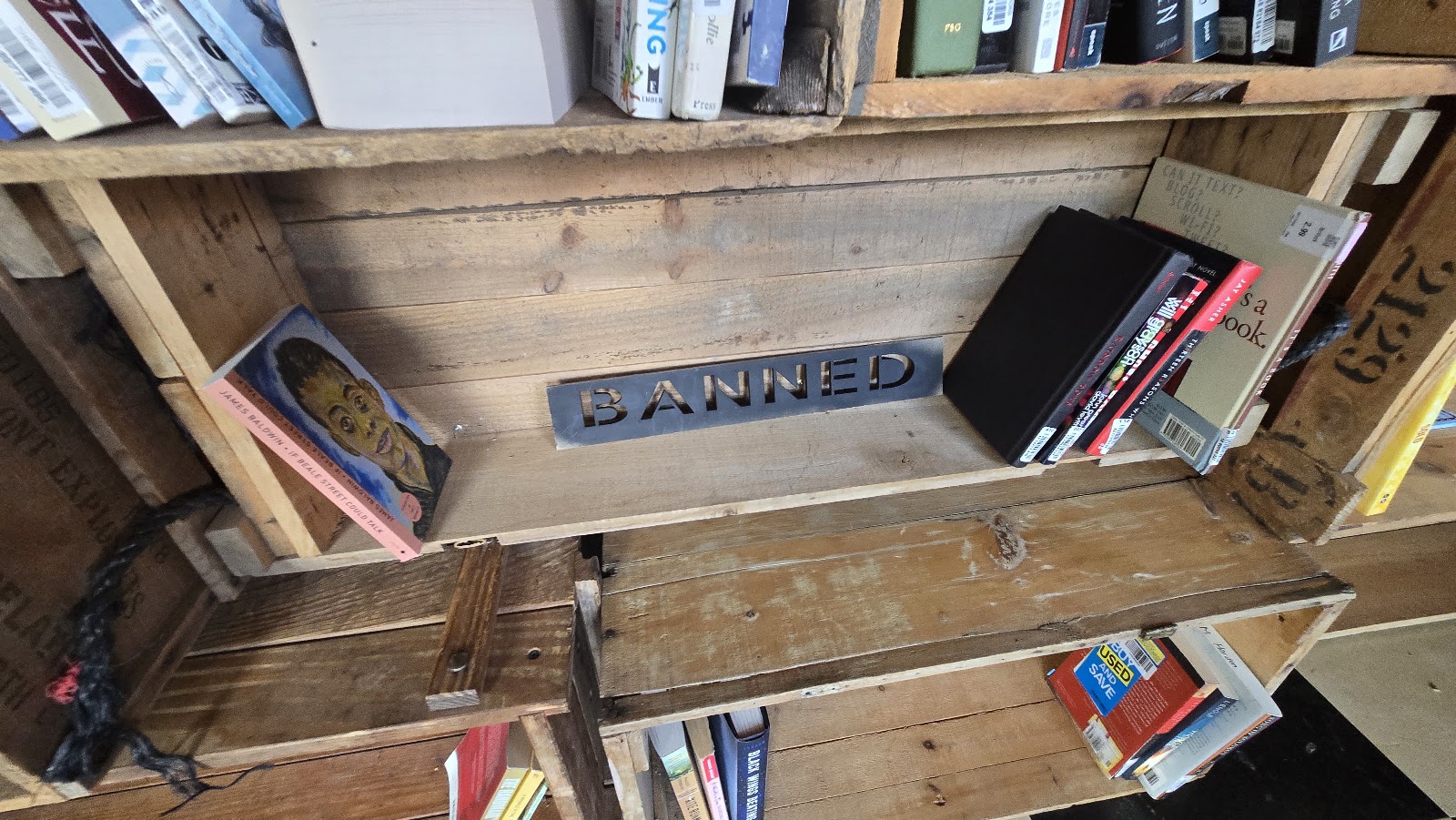
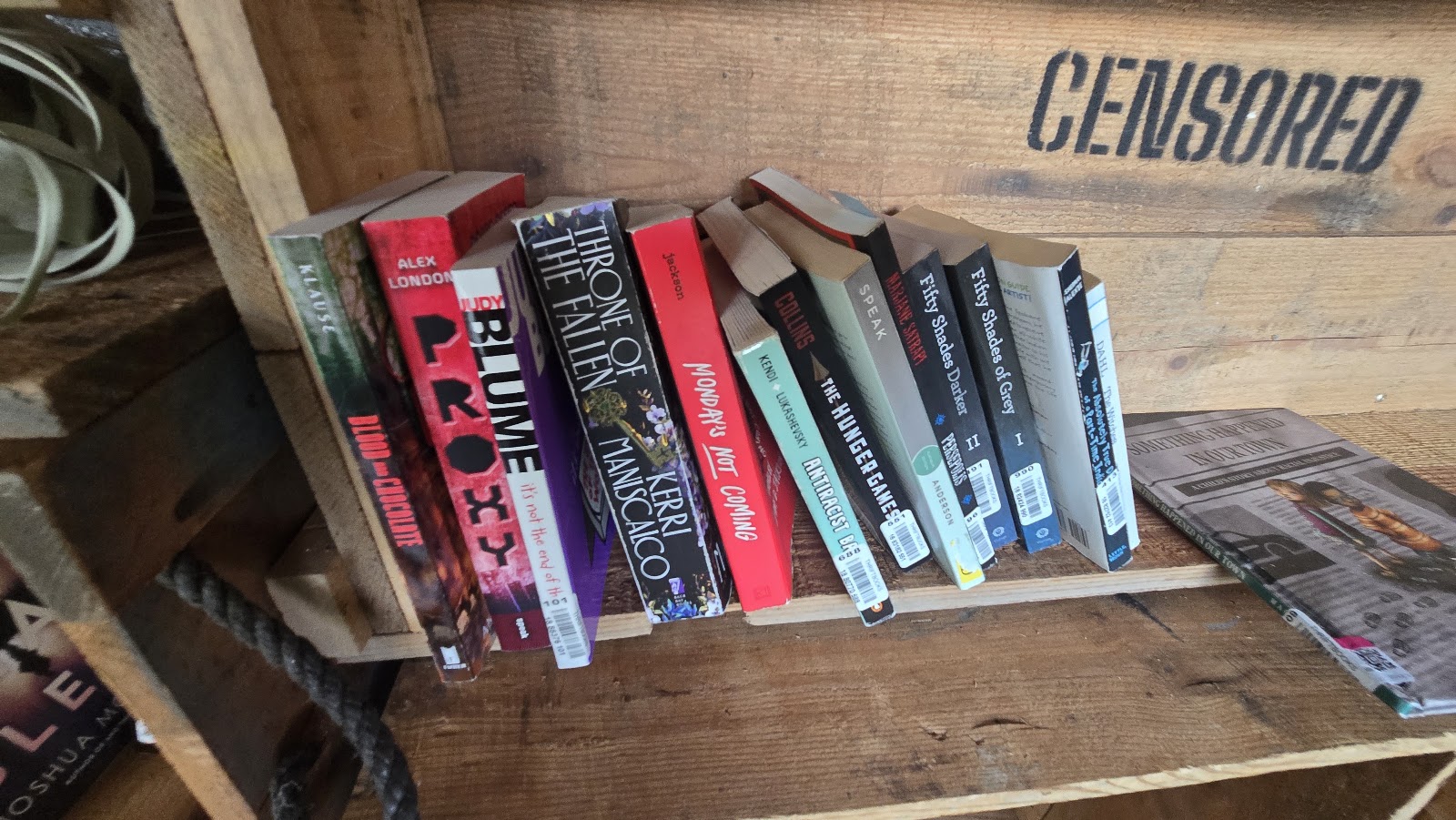
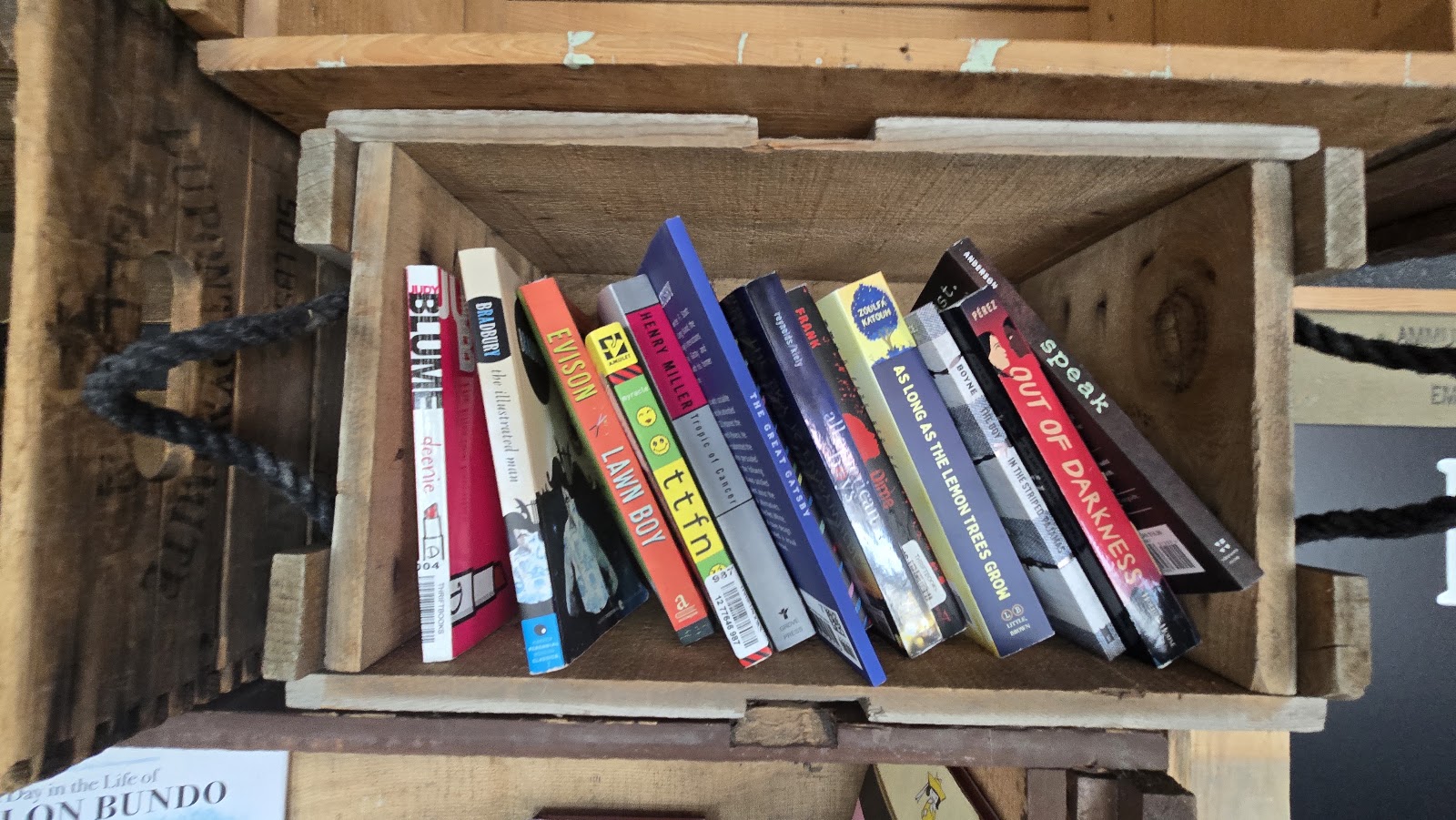
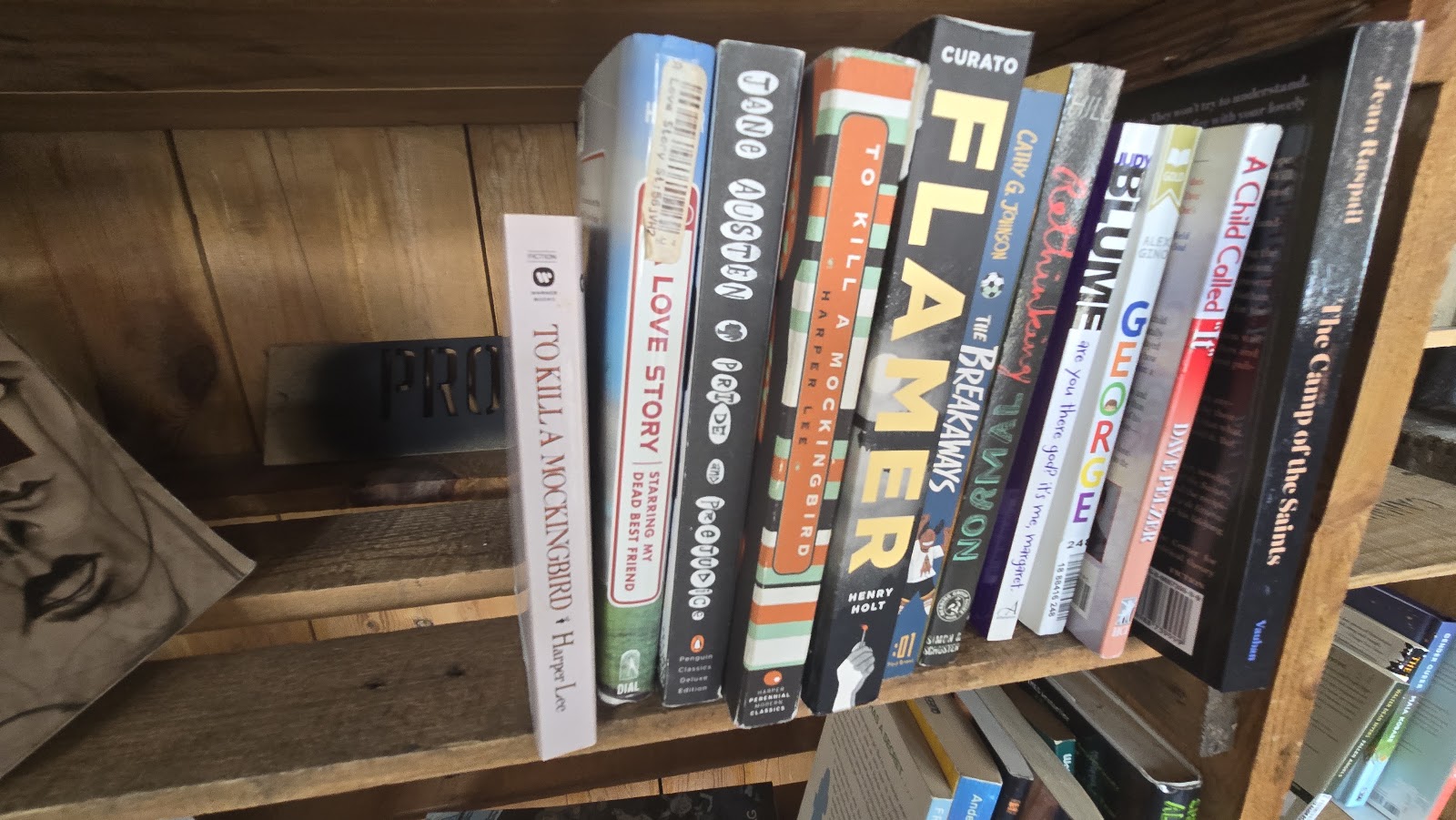
These are the usual suspects — the titles that turn up on every ban list because each one, at some point, told a truth someone would rather bury. To a Stoic that’s exactly the point: an idea is not made false by being forbidden, and a mind is not made safe by being kept ignorant.
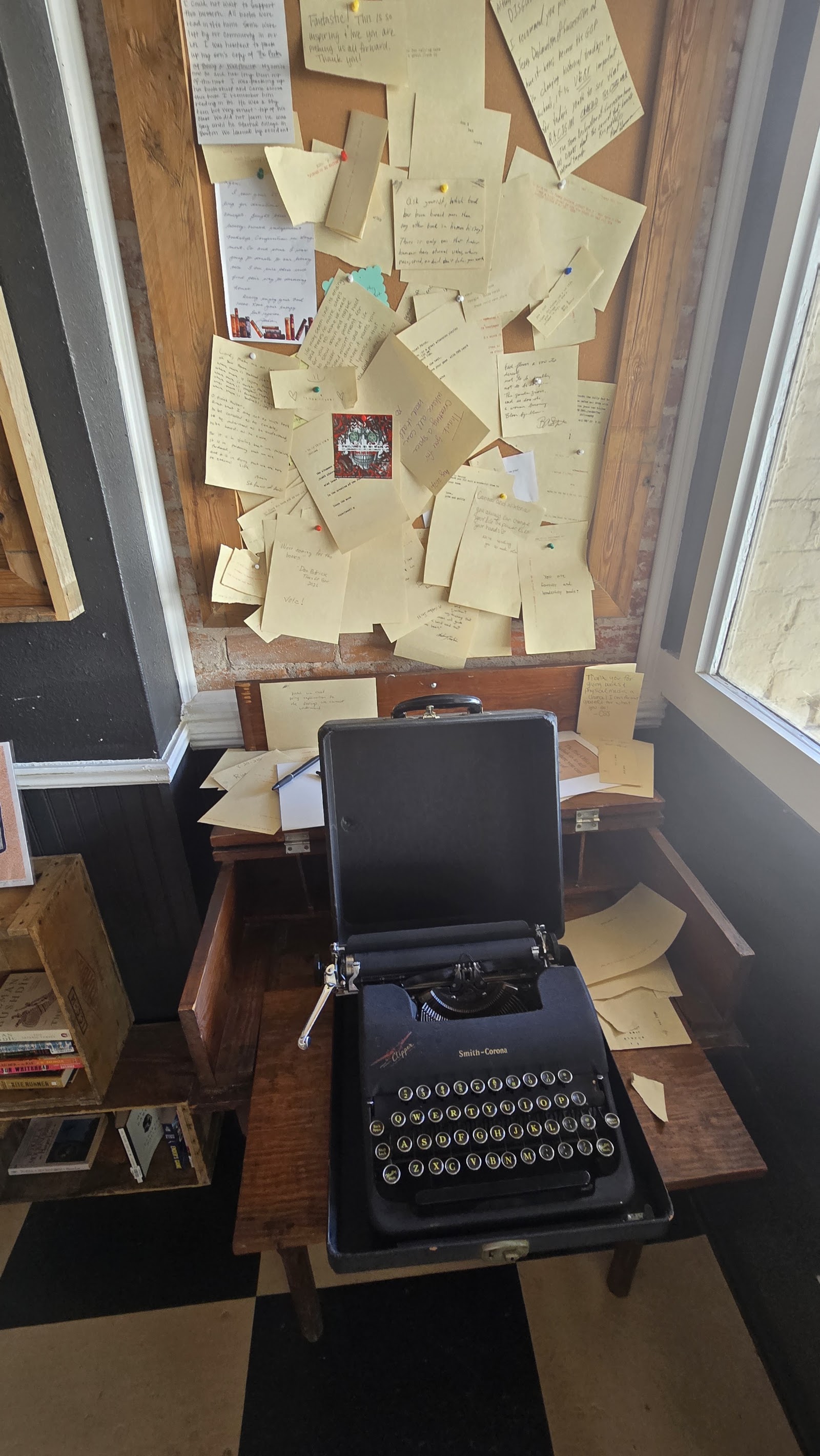
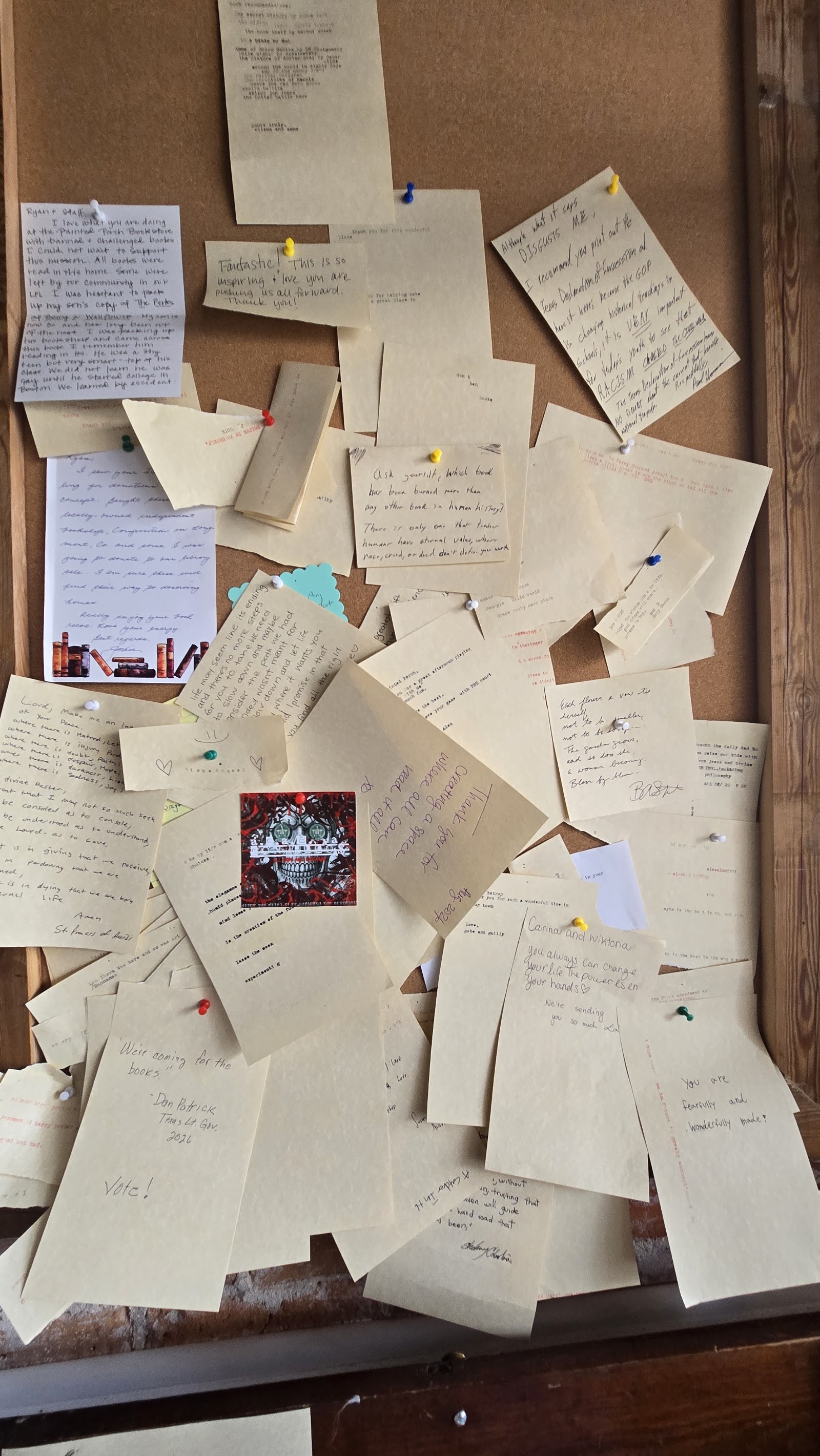
Toward the window, a battered Smith-Corona waits on a stand, and the wall above it has filled with cards — visitors typing and scrawling the banned book that got to them first. It’s the whole argument in miniature: you can pull a title from a list, but you can’t un-read it, and you certainly can’t un-love it.
Epictetus was born a slave and died the freest man in Rome, because he understood that no jailer can reach a mind that refuses to be jailed. The Porch’s banned shelf is a small monument to the same idea: put the forbidden books where the light hits them, and trust people to choose for themselves.
That isn’t recklessness. It’s the Stoic wager — that a free person, handed a dangerous idea, will more often than not choose well. So: read the banned ones. It might be the most Stoic thing you can do with an afternoon.
And if you want the whole Stoic program, it’s spelled out on the far window before you even step inside — four words in gold: Courage. Temperance. Justice. Wisdom. The same four the books on these shelves keep teaching, one dangerous idea at a time.